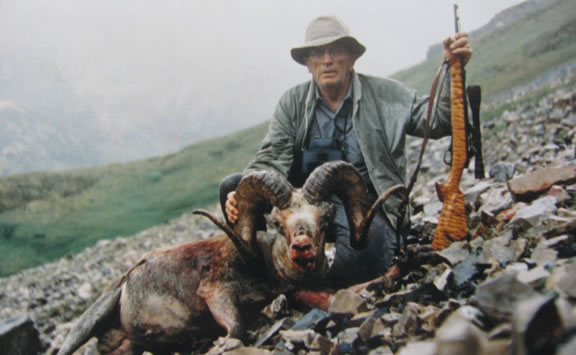
 There has been a long time debate on the aging of rams in the field by counting the annuli on their horns. This won’t be a tutorial on “aging” a thinhorn to the specific year (we’ll touch on it) but more on how to judge an Old Ram vs. a Young Ram.
It’s been studied and documented that harvesting the older mature rams is the least harmful harvest on the population dynamics of any given herd of Stone’s Sheep. Sheep are a species that suffer very low mortality rates among healthy animals in their prime of life (5,6,7 even 8 ) year old rams because of the way they live. They look out for each other! These mid-mature rams are the most likely to survive the harsh winter directly following after the rut.
The older 8,9,10+ rams are the least likely to survive, so in order to harvest the individuals that will least impact the herd we should be targeting these older more mature rams because “technically” they are going to die within the next year or two anyways. If a ram is 10+ it’s a good chance he’s on his last legs and likely may not even be breeding anymore, instead sitting back and watching the drama of the rut unfold conserving their energy for the long winter ahead and taking the limited feed from the young up and comers.
Now that aside let’s start talking about a Thinhorn Rams horn… Thinhorn lambs are usually born in June (we’re talking stone’s sheep here)… If it’s born a ram this means he’s really only got 3-4 months from birth (june,july,august,september) for his horns to grow until winter and then they will cease to grow throughout the cold, harsh winter months when food is scarce and energy goes into creating body heat.
In the spring as early as April (weather and feed permitting) the growth begins again and this starting and stopping of growth every year is how the “annuli” or “growth rings” are formed on a ram.
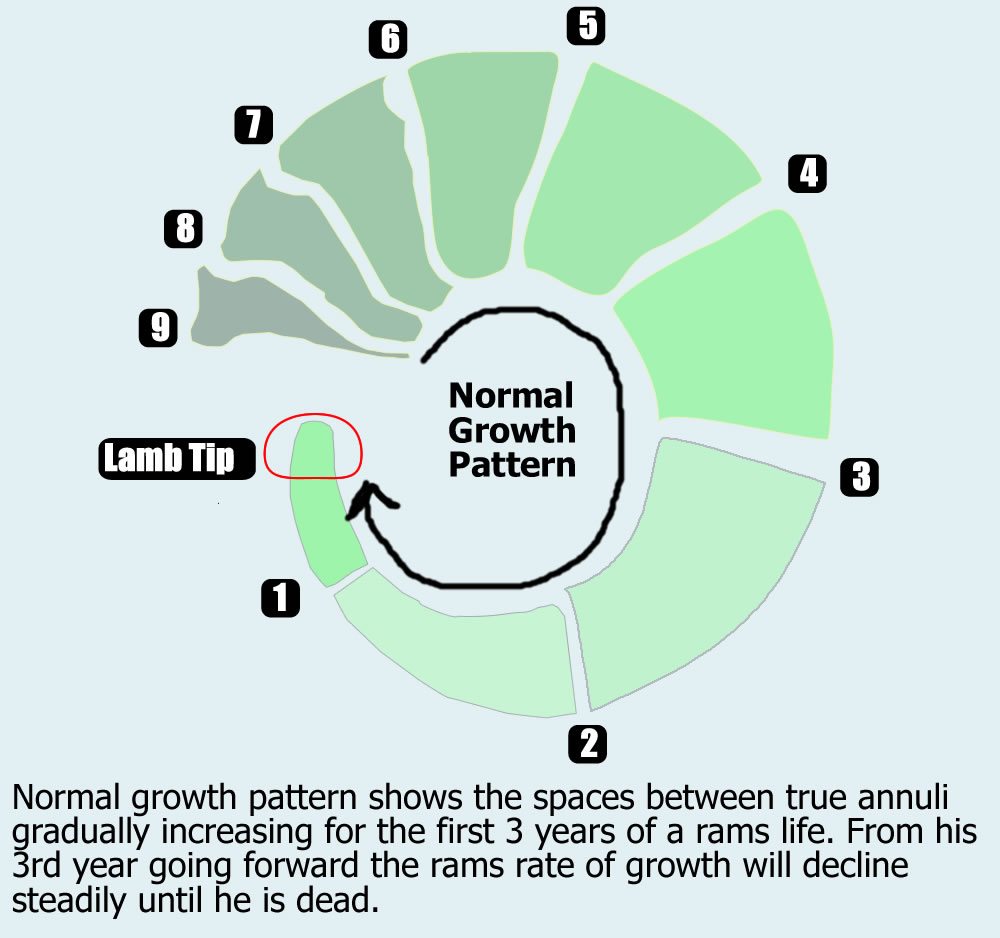
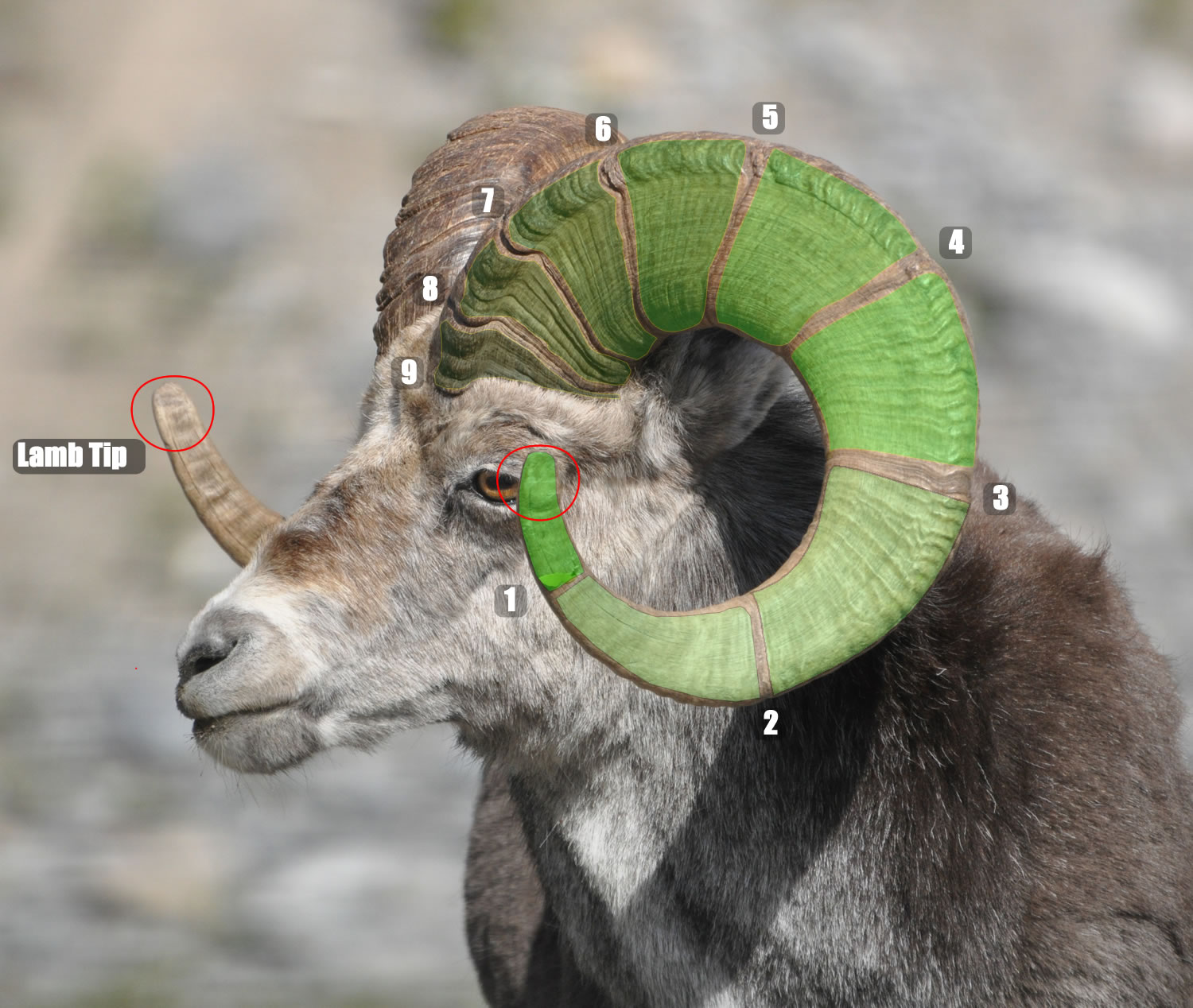
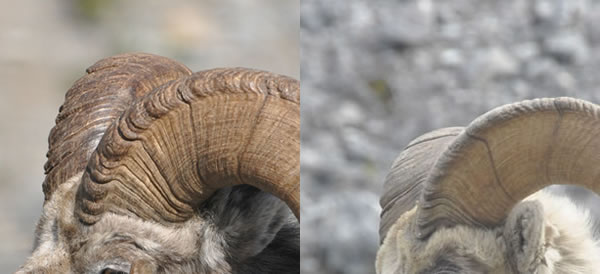
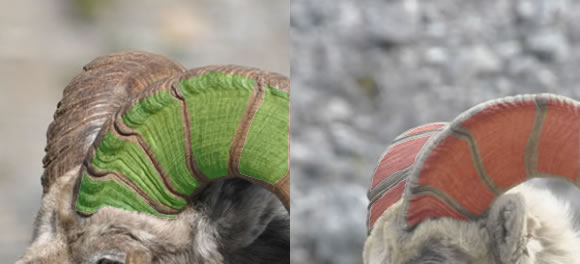
During the 2nd, 3rd, and 4th years of a rams life his horns will grow quite rapidly and you can see evidence of this rapid growth in the wide distances between his annuli. As a ram ages beyond 5,6 & 7 his rate of growth (in length) will become less and less as the years progress and his horns will gain circumference and mass instead. As illustrated below.
Click On Any Photo To Enlarge
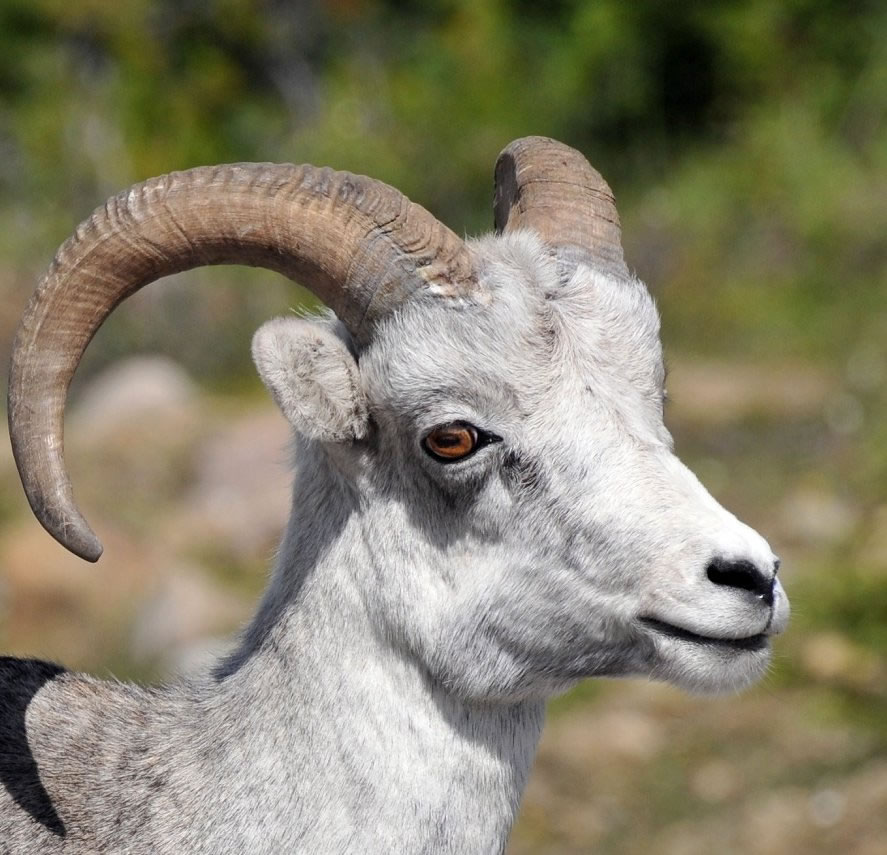
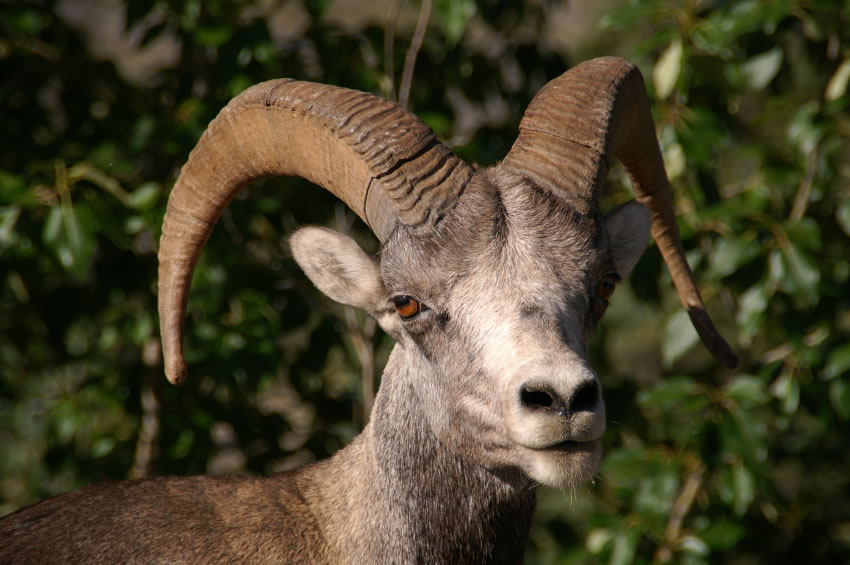
These first four years are when the ram will grow the fastest which is evident in the spacing of his annuli. From this point on the ram the ram will be putting less energy into horn length and more energy into the weight and circumference of his bases in preparation for the many battles he will encounter in the next few years during the rut.
After the rams 4th year the distance between his annuli is going to start getting progressively shorter and shorter as that new horn growth is no longer put only into the length of the rams horn, but also into building up mass in his bases so when the rut comes and he’s old enough to participate (5,6,7+) he will be ready to take some substantial blows to the head during the many fights he may encounter when trying to breed.
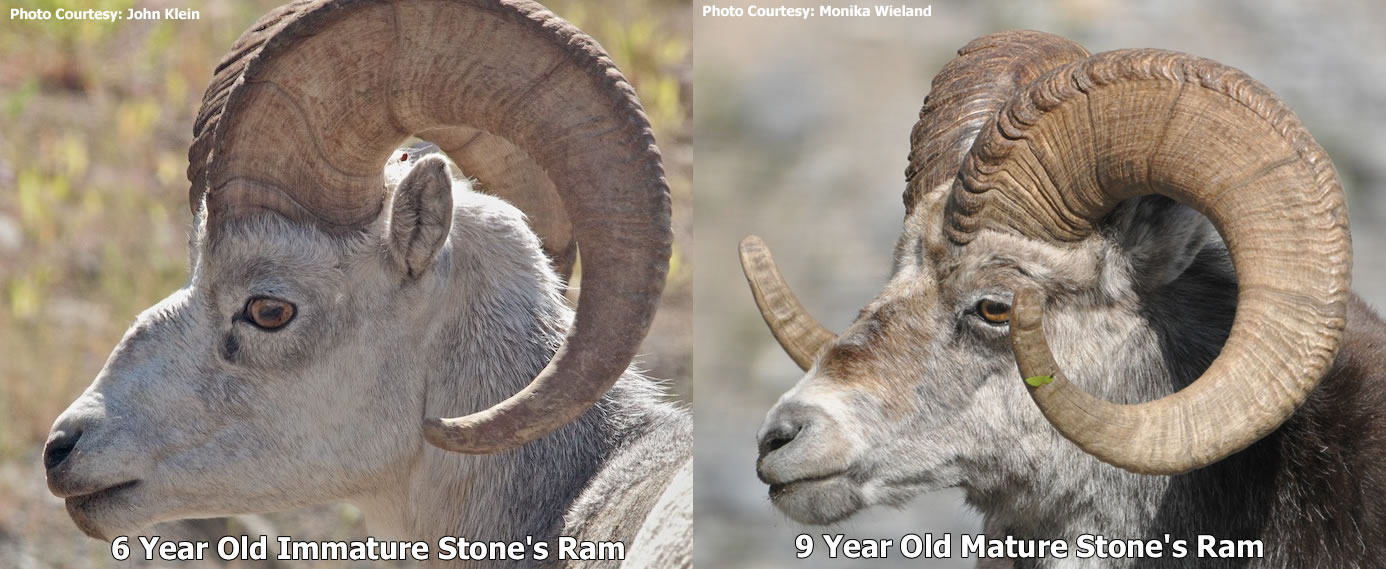
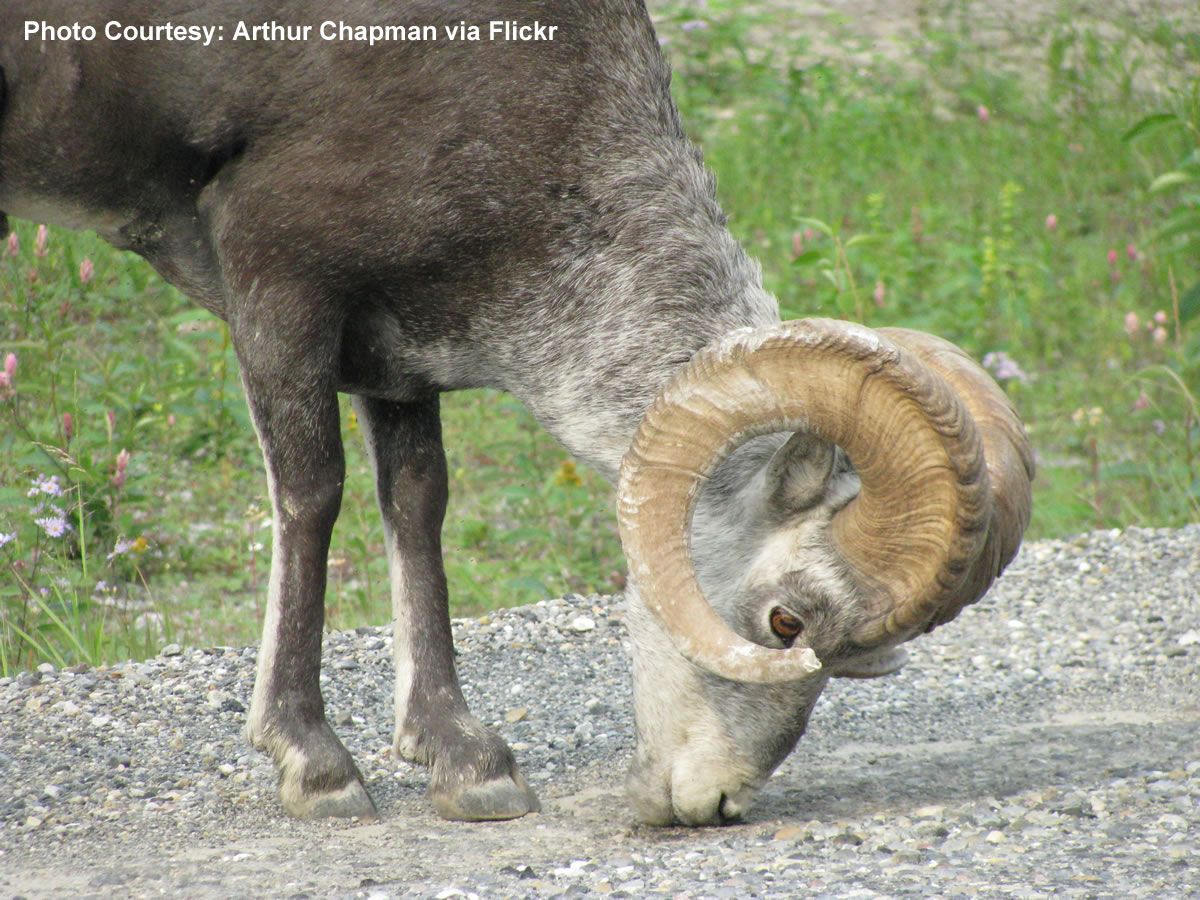
This young ram appears to be roughly 6.5 years of age.
The bases are much larger and he’s starting to curl but at such a young age he’s still got quite a ways to go for “legal” status. This ram would now be considered “breeding age” and although he’s not the biggest ram, he’ll sneak in anywhere he can for some ewe. Take notice of how the spacing between his annuli is gradually getting smaller?
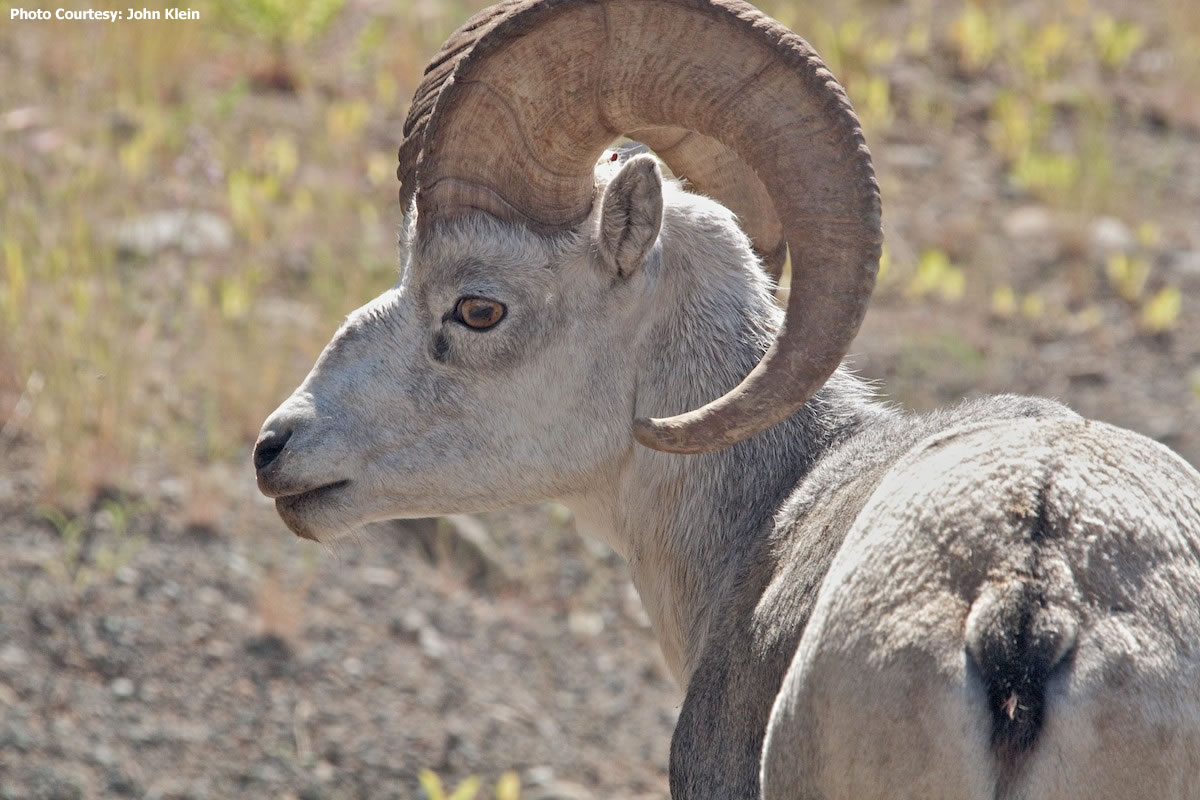
This young ram appears to be roughly 6.5 years of age.
You can clearly see the wide spacing of annuli close to his bases. A clue he’s a young ram. Just like the ram above, even though he’s sexually mature and now fighting for dominance within the band he’s still got a few years left until he becomes a truly great ram.
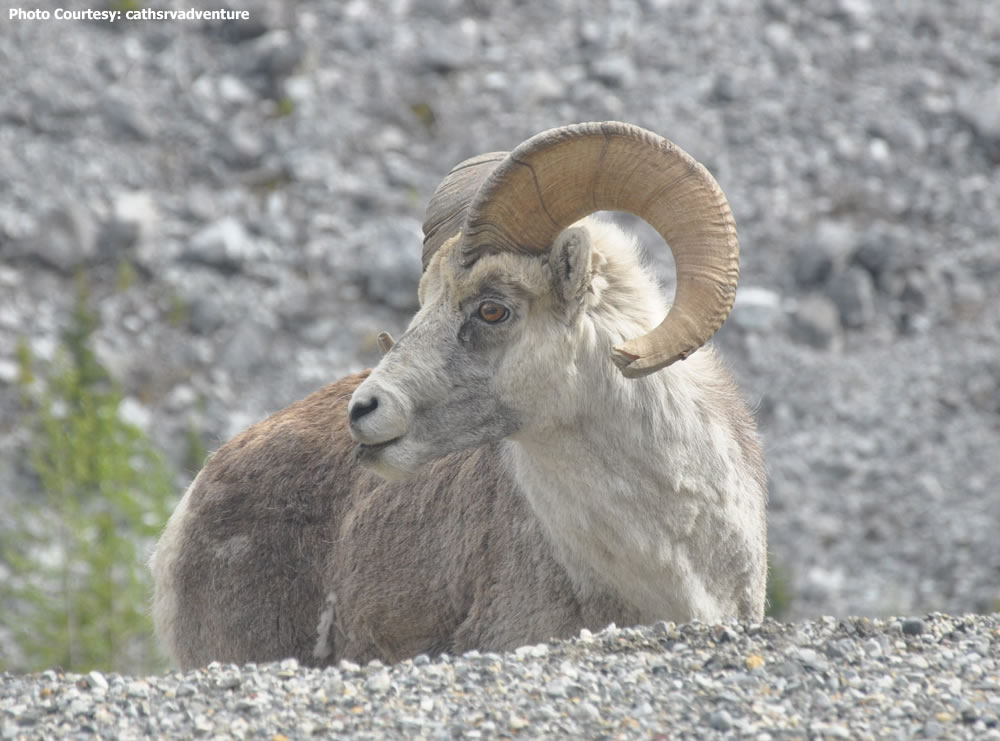
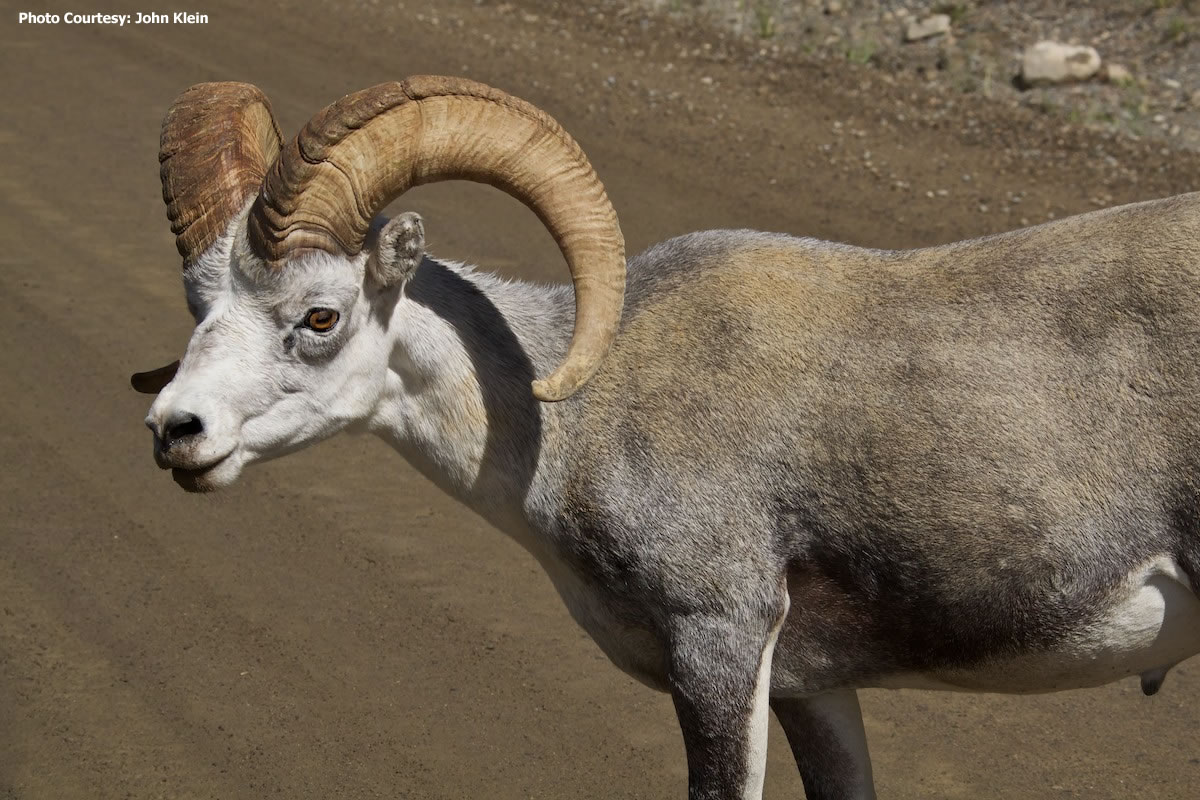
This young ram appears to be 7.5 years of age.
He might almost make full curl on his other side, but with the brooming and the fact he is visibly still a young ram, this is a ram better left on the mountain. In two or three more years he’ll be a great ram.
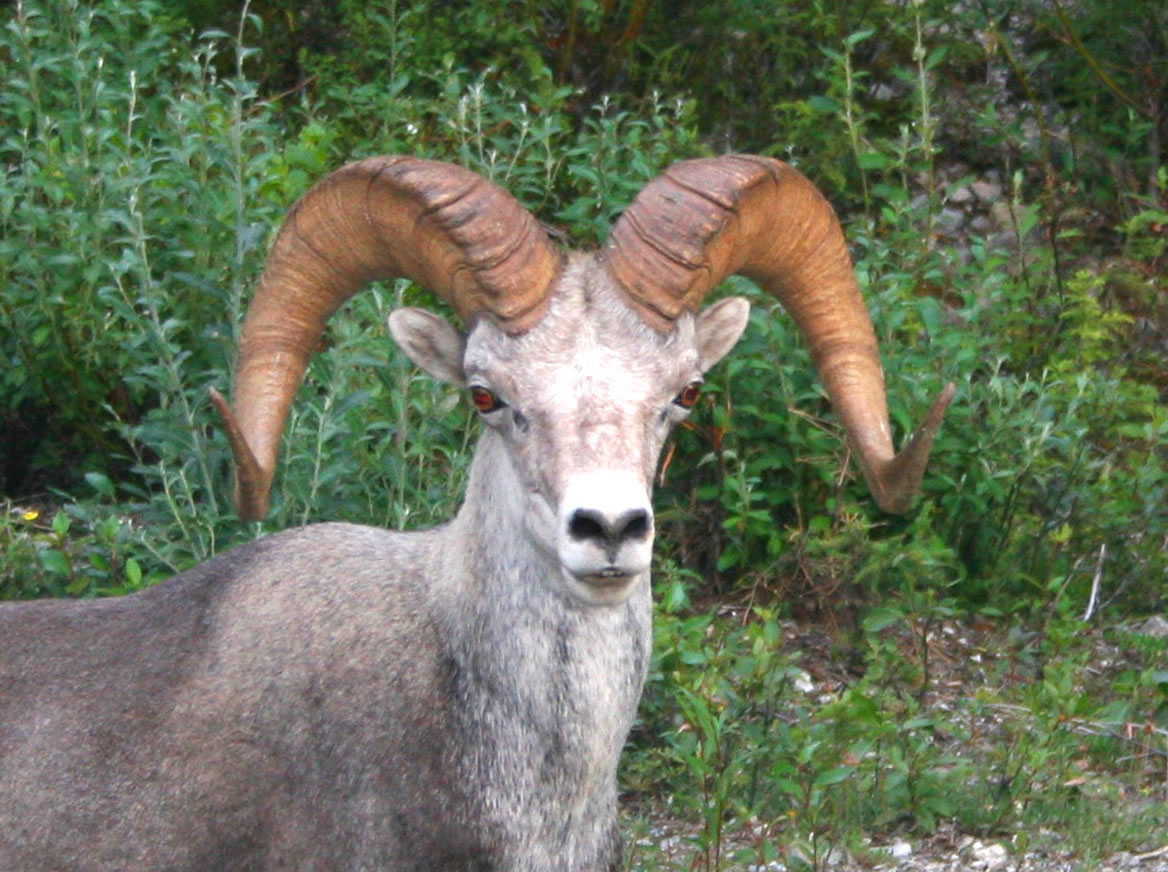
This mature ram appears to be roughly 8.5 years old.
His curl is very close to full curl but you’d really need to view this ram squarely from the side to make that call. Based on what is visible for Annuli he would be a legal ram by age. But that is a decision that would be left to you. Are there bigger rams? Yep, certainly… Is he a respectable 8 year old ram? Yep, certainly!
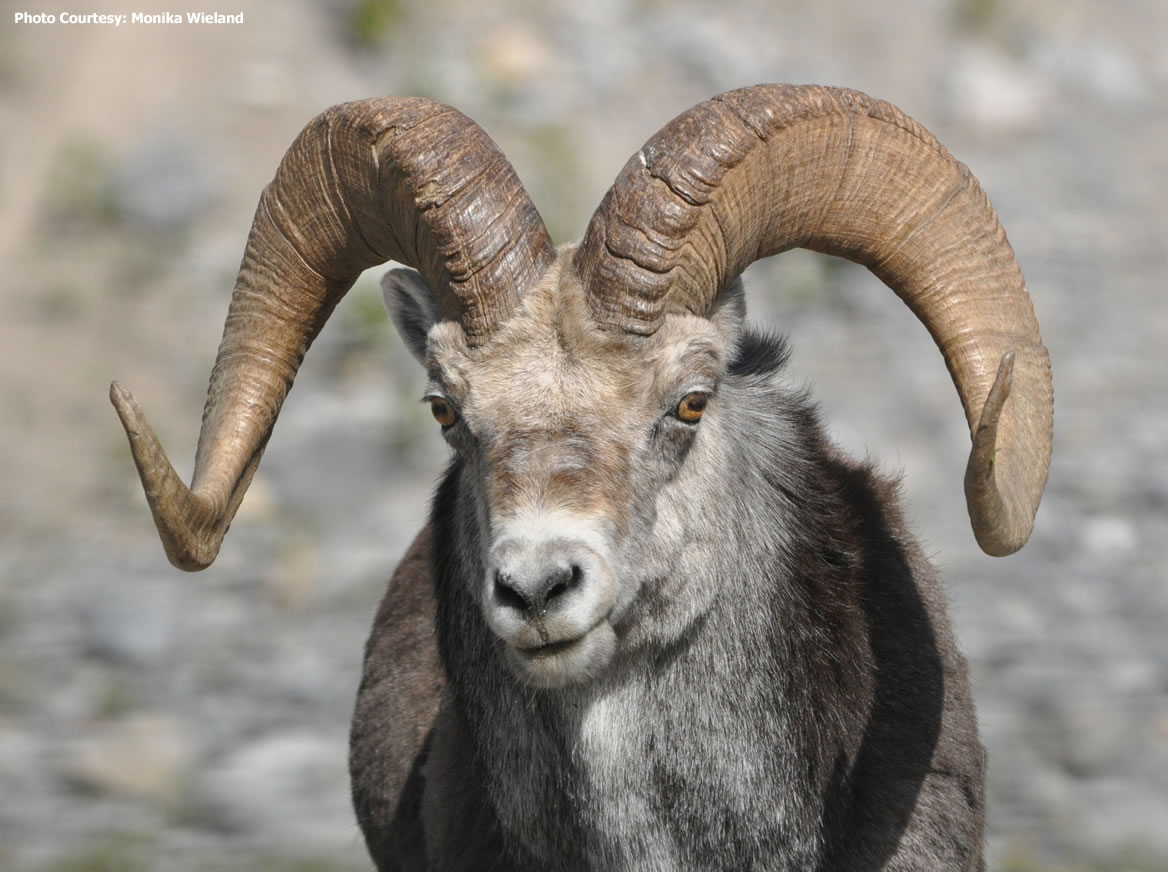
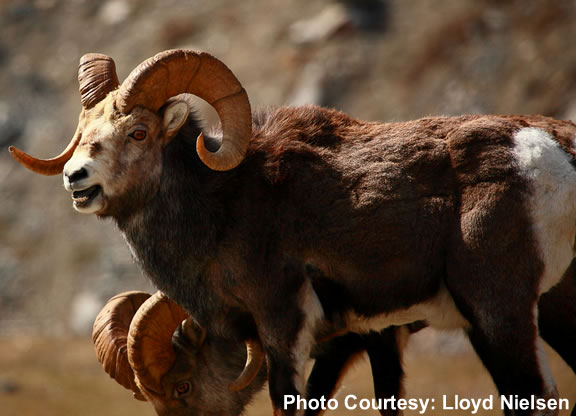
This mature ram appears to be at least 8.5
Aside from the fact that he looks like a good ram, there are other clues to his maturity aside from the fact that we can safely count 8 annuli with a couple of inches of horn left to go towards the base. He’s definitely legal by age and he’s definitely legal by curl and displays other characteristics of a good mature Stone’s Sheep ram.
- Appears To Be Full Curl.
- Rough Looking Bases/Horns.
- Tightly Packed Annuli Near Bases.
- Carrys Consistent Weight To Horn Tips.
- A Good Example Of A Legal & Mature Ram.
Once You Understand Growth Patterns This Becomes Much Easier…
What Is A Growth Pattern?
The growth pattern on a ram is the gradual increase and decrease of growth over his lifespan as evidenced by the spacing between the annuli on his horns. By knowing and understanding what a growth pattern is and how to look for it, you can better hone in on the calibre of ram you’re looking at when trying to make the decision on mature vs young.
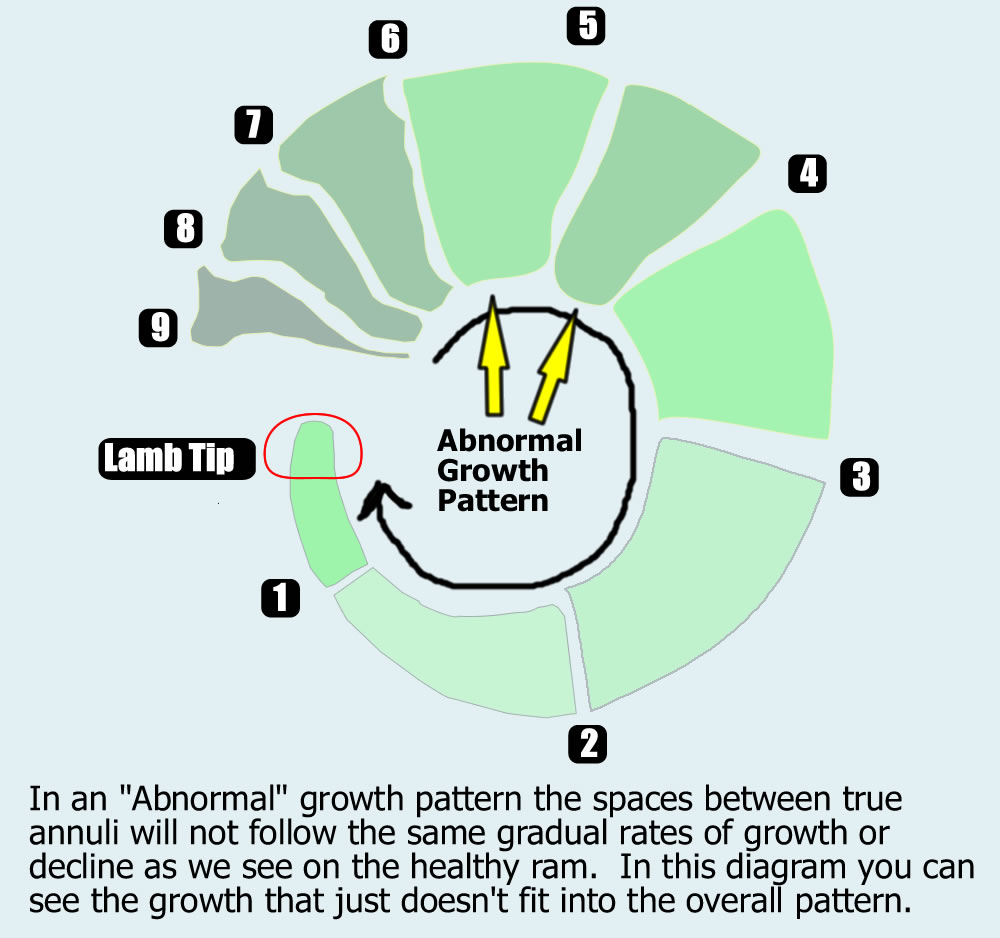

The difference between a 40″ and a 36″ ram is only 4 inches in length. If you averaged that growth out over a period of lets say 8 years (a mature ram) that only equates to about 1/2″ an inch difference in growth each year. So the annuli on a 36″ or a 40″ ram (from the same general area) aren’t going to fall in radically different spots, there will be a consistency. By knowing what a growth pattern is, and how to spot one you can hone in on where the annuli SHOULD be and you’ll be in a better position to discount the false annuli that will surely be present.
Just to go over it one more time… The growth pattern on a ram is the gradual increase and decrease of horn growth over his lifespan as evidenced by the spacing between the annuli on his horns.
Aging rams in the field can be difficult if you don’t know what to look for. Every year this leads to the seizure of illegal and underaged rams across all species (thinhorn and bighorn) throughout BC. A practice that isn’t good for our sheep or future sheep hunting opportunities.
While many hunters trudge out into the mountains every year somewhat clueless as to what to look for aside from the full curl diagram in the game regulations, the ability to identify a mature legal ram, from an immature legal ram is a good skill to have. Without aging to the specific year there are many different methods talked about by guides and other sheep hunters as to how to quickly judging trophy quality of a ram, but for this article we’re going to stick with one of the simplest methods and probably the easiest for any new sheep hunter to quickly identify mature Stone’s rams out of a band of several.

Awesome article man!! Great photos, examples, etc.
Really appreciate an article like this!
Hey Trevor,
Thanks! Glad you found it helpful. Good luck in the hills this year!
Carl
Great article Carl. Thanks for taking the time to sum it all up. Every new/novice sheep hunter should read this.
Clayton
Thanks Clayton,
Good luck on your hunt this year!
Carl
Awesome description for identifying trophy vs non trophy sheep. I was always uncomfortable when bowhunting Stones because I had a difficult task “aging” them. This is the most comprehensive guide I’ve found. Thank you.
Jeff
Hey Jeff,
Thanks for your comments. I am glad you found it helpful, good luck out there!
Carl
Some day I look forward to using this information to help assist my guide is chosing a nice mature Stone Ram for me to harvest. Thanks for putting together great info such as this. I have printed this and will refer to it often from now on to become better at chosing a great Stone.
John
Hey John,
Thanks for your comments! I hope you have a great hunt when it happens!
Carl
Fantastic – without question one of, if not the most informative, postings I’ve ever read for judging sheep.
Thank you
Joe Want
Thanks Joe,
Glad you’ve found it helpful!
Carl
Thanks for putting this awesome presentation together. I wish I would have seen it earlier when i first started sheep hunting. It’s the best post on how to judge sheep I have ever seen. Time to go hiking!
Hey Travis,
Thank you for your feedback! I am glad you’ve found it helpful. Yeah, it’s always a good time to go hiking!
Carl
One of the best tools for judging sheep I have found. Could you share how the lamb tips are formed?
Thanks Stephen,
Glad you found it helpful! The lamb tips are formed during the rams first few months of life. Some rams broom them off before they are legal to shoot though.
Carl
Well done.
Thanks JC! I hope you found it helpful.
Carl
Amazing post!! Perfect explanation of ram curl. The pictures really makes everything a lot clearer. Thank you.
Thanks John, Glad you found it helpful.
Carl
What I really like about this article is that it is well explained, the photos are of a great quality and the growth platform is presented in detail. Thank you for sharing!
Hey Peter,
Thanks for your comments. Maybe you would be so kind as to reciprocate the backlink? If you posted a link to this article on your site?
Carl
Thanks Carl ,
I review this site lots as a refresher ….and the gear list!
Thanks again Jamie
Cannot thank you enough for posting this! It has become extremely helpful to me; as me and a friend are going for a Stone Sheep hunt next year.
Thanks Jamie,
I am glad you find it helpful!
Carl
Thanks Brandon!
I am glad you found it helpful, Good Luck on your hunt next year!
Carl
This was an awesome guide, the pictures of the rams really helped me identify the differences between the trophy and non-trophy animals.
Very nicely done,great photos.The only thing i got to say is, big looks big,small looks small.Squeekers??? hmm move on.Everyone should study photos of rams.Being hunting them for over 20 years and still learning.Good hunting to everyone.
Thanks George. Glad you found it helpful. Good luck out there.
Carl
Thanks for the article. I bookmarked it as a reference guide to all new sheep hunters.
Well written and informative, nice job
Chris
Hi Chris,
Cool, Thanks. Glad you found it helpful.
Carl
Excellent article. Who would I speak to regarding reprinting portions of this in the Wild Sheep Society of BC’s magazine, Wild Sheep Forever?
Hi Bill,
Thank you for the kind words. The person you’d be looking for is me. Yes, you are more than welcome to reprint portions in the WSSOBC magazine.
Carl
Thanks Carl for the great info. I’m going hunting with BC Safaris in a few months and this helps me with my home work. When I am hunting deer in Wyoming I may pass up 60 – 80 bucks before I find what I want.
I get the feeling this is not what Stone sheep hunting is like. How picky should one be?
Hey Craig,
It looks like you’ll be hunting in Region 6 which has a healthy population of Stone’s and generally the outfitters in the region have decent success rates. You might not get the chance to pass up 60-80 rams though, lol. I’ve been hunting Stone’s for a decade now (every year) and haven’t even shot one yet! We have passed up several though as I’d prefer a ram that is at least 10 years old or 40″ a nice mature ram. How picky you get is up to you but I’ll tell you that harvesting a full curl 8 year old ram is quite an accomplishment. The better shape you are in the more enjoyable your hunt is going to be. Good Luck!
Carl